
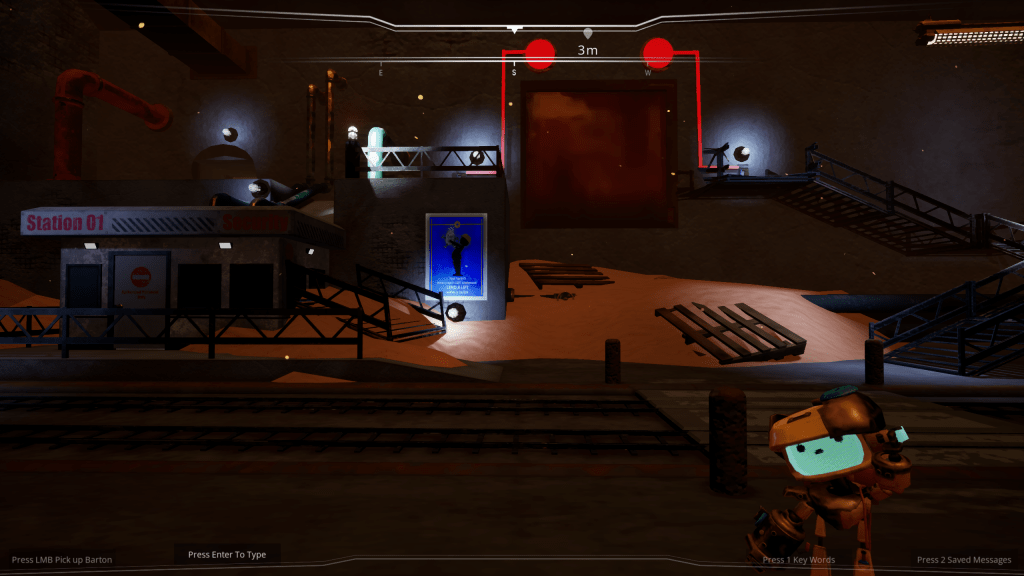
A sci-fi themed puzzle adventure, where the player has an open dialogue with a companion bot named Barton.
Barton’s open dialogue functionality is driven from a Large Language Learning Model (Chat GTP 4o mini). Through player input and prompts, you and Barton can discuss anything, and build a connection together. What kind of relationship will you develop, while seeking to escape this desolate desert planet?
21 person academic game team, created in Unreal Engine 5.
Generative AI was solely used to create text responses based on player inputs. All design, art, programming, or otherwise was proudly done by members of our game team, Wise Reply.
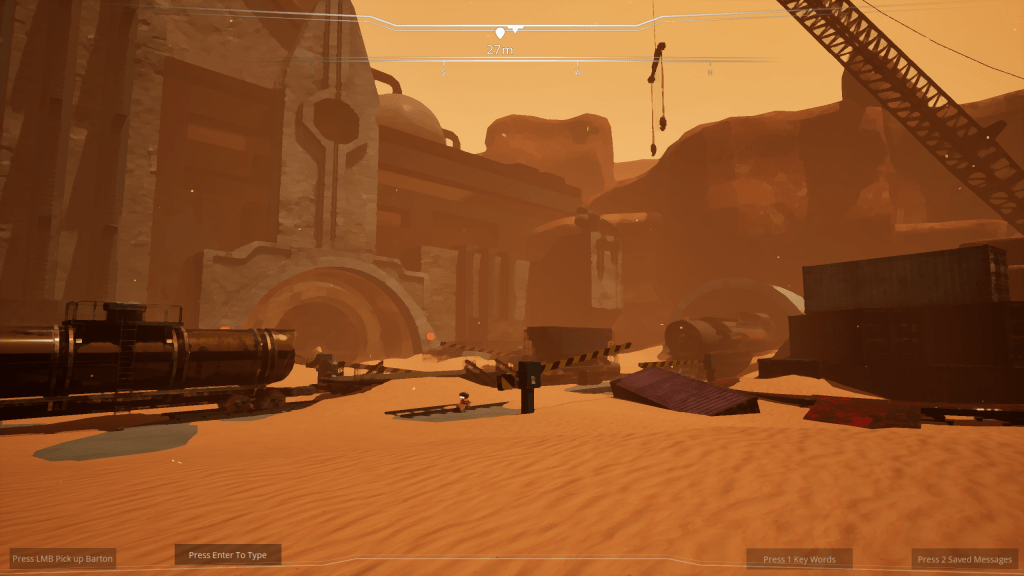
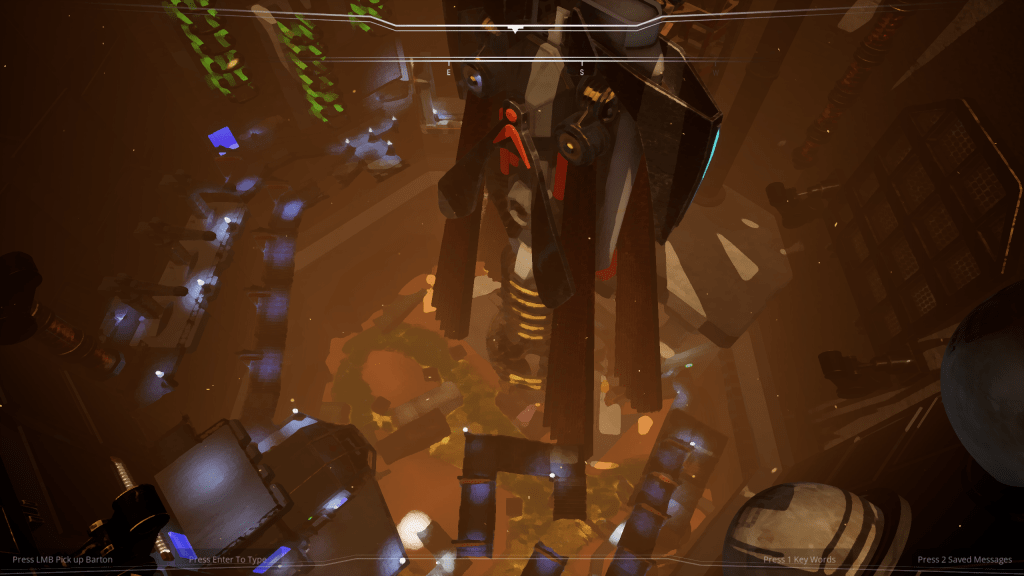
Interior & Exterior level spaces in Barton.
Project Overview:
Building a word the player and an AI companion explore together.
Scope:
Barton was created in Unreal Engine 5. Two semesters (about 30 weeks) of development time was allocated. Our team consisted of 20 people, 5 designers, 5 programmers, 9 artists, and 1 sound designer comprised our team, Wise Reply.
We sought to create a unique experience where the player crash lands on a desolate planet, and must work with a quirky bot named Barton, to ascend an abandoned research facility, and escape together. All while the player and Barton can converse back and forth with each other, building a rapport and relationship that’s entirely unique. Because of Barton’s dialogue being non deterministic, no one playthrough will ever be the same as the last.
We mainly wanted to emphasize the player building a connection with Barton through gameplay. Thus the subsequent puzzles and obstacles the player and Barton faced were created not to necessarily challenge the player, but to give them meaningful goals and objectives to overcome together.
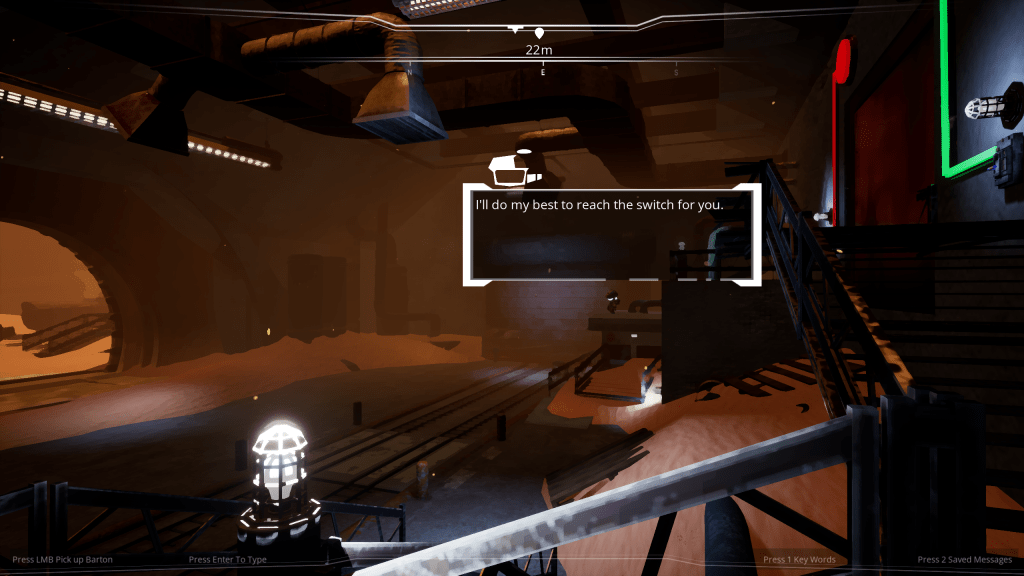
The player and Barton work together to open a door leading deeper into the facility.
Team collaboration:
I worked with the other designers to narrow down the many affordances of Barton. Or in other words, what he can and can’t do and interact with within the game world. This was shaped by testing and iterating based on prototyping different puzzles and mechanics the player and Barton could contextualize with. We wanted the player and Barton to have an interesting variety of mechanisms to interact with, and environments to pass through. The pressure plate functions differently than a lever, but both can be recognized as a key-word for Barton, allowing him to recognize and interact with these objects.
I worked with programmers and technical designers to ensure that Barton was able to function in the level spaces I was creating. Tweaking Barton’s interactions and ensuring that every available option the player had to pass through a challenge worked as intended, was at times quite difficult.
I worked very closely with the environment art team to ensure that the assets from micro to macro scale were properly integrated within level spaces. This ranged from tweaking the positions of props to improve sightlines or guidance. Or it was as extreme as replacing the prototyped blockmesh space of the entire interior (where most gameplay occurred), with finalized assets created by the art team.
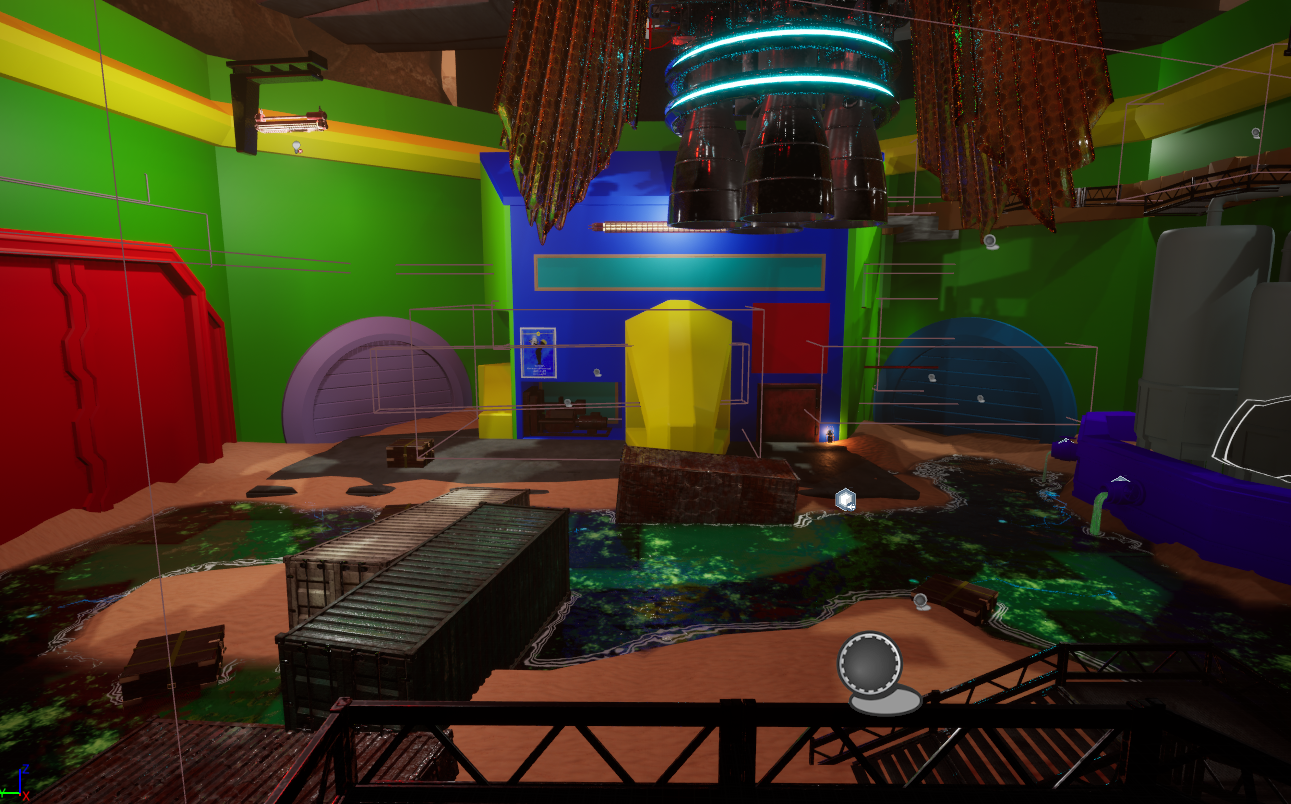
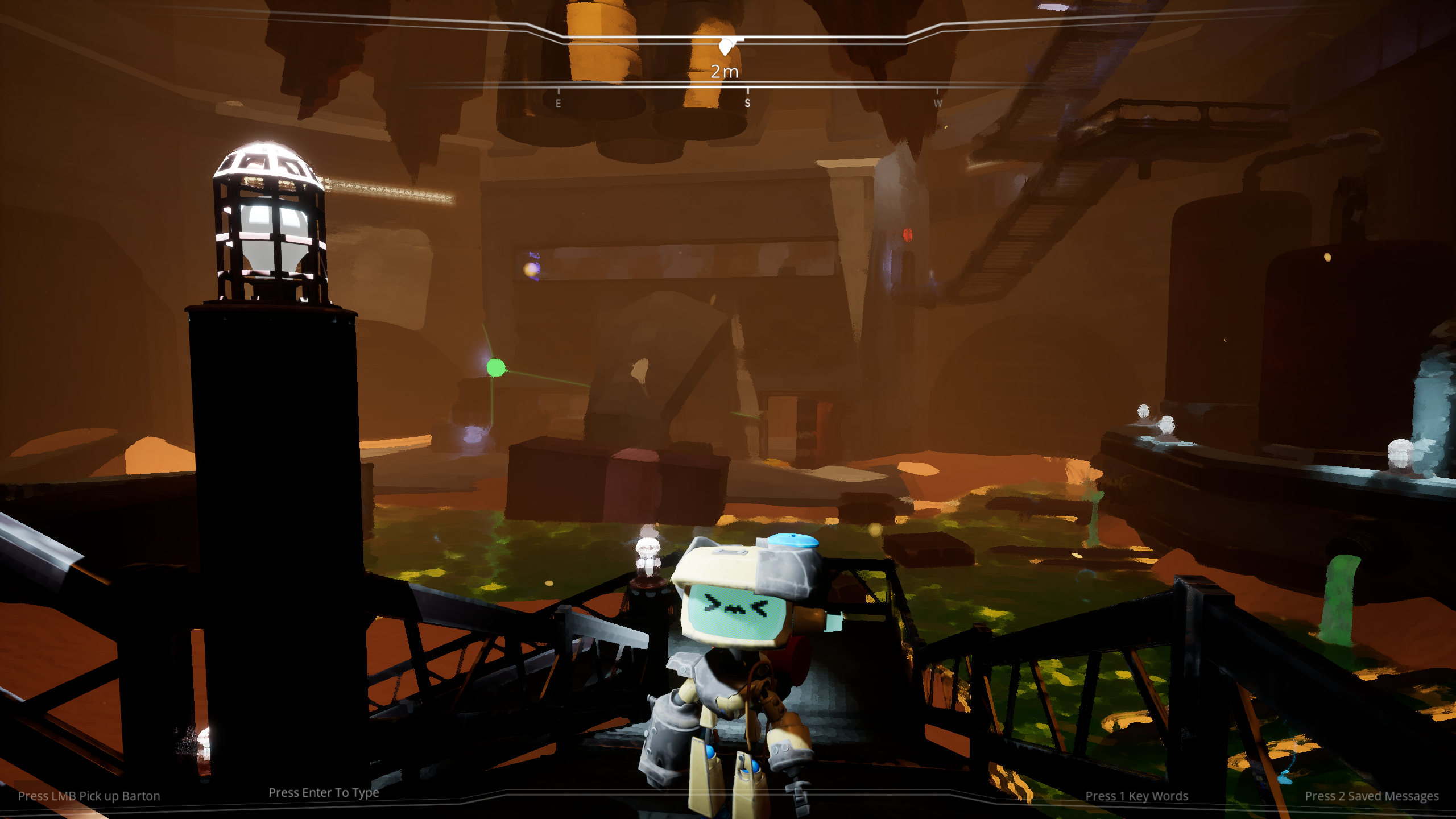


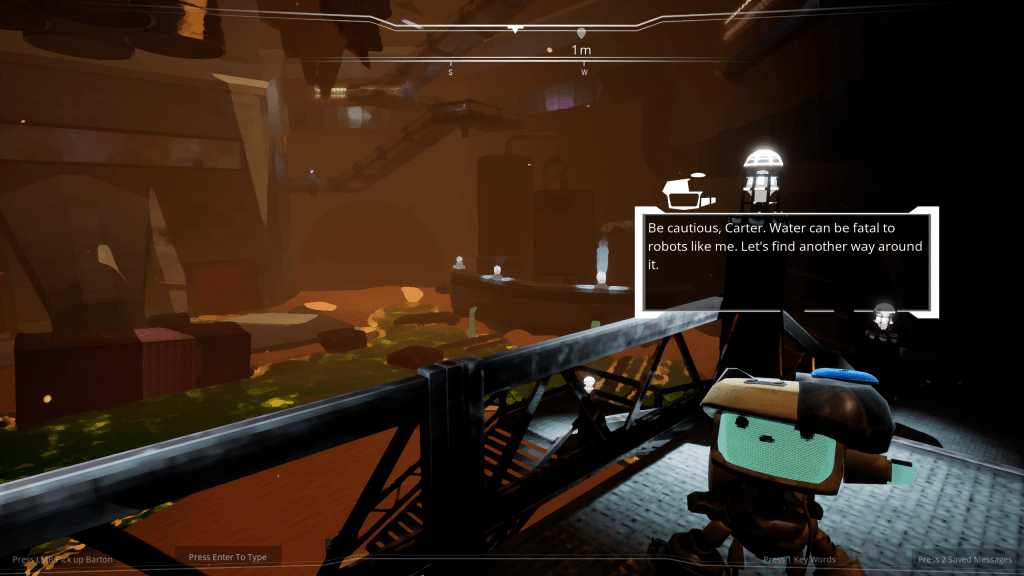
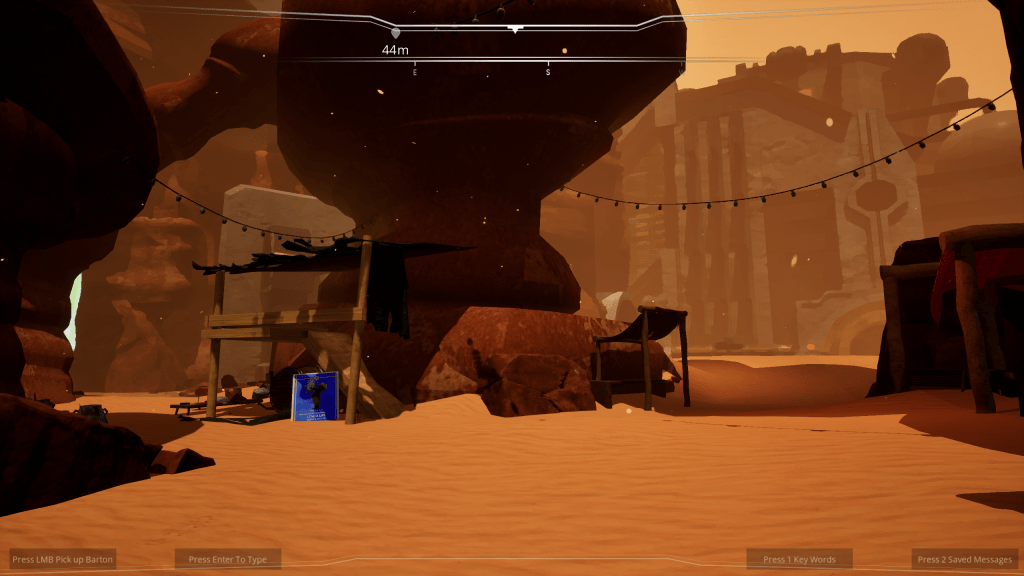
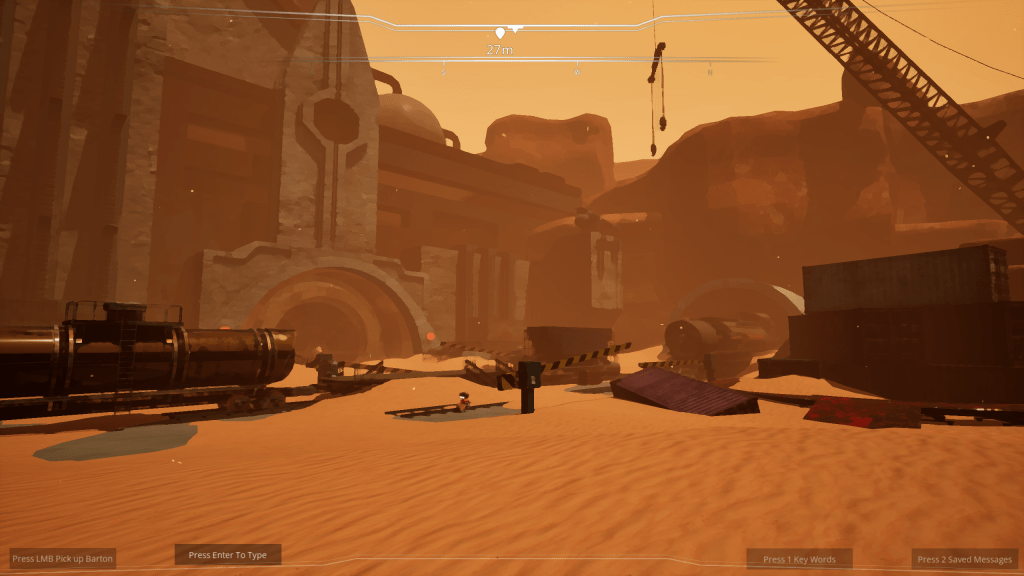
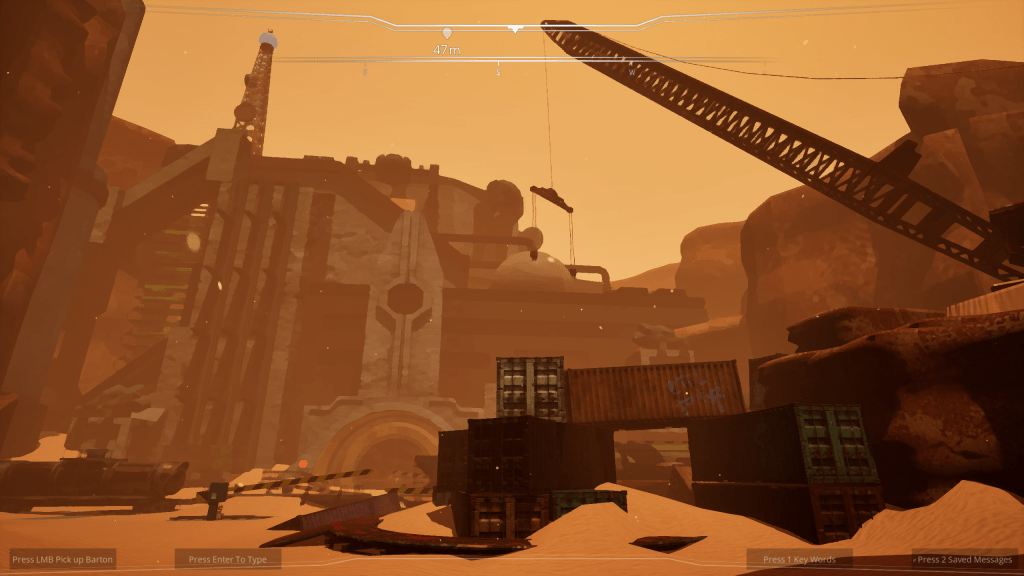


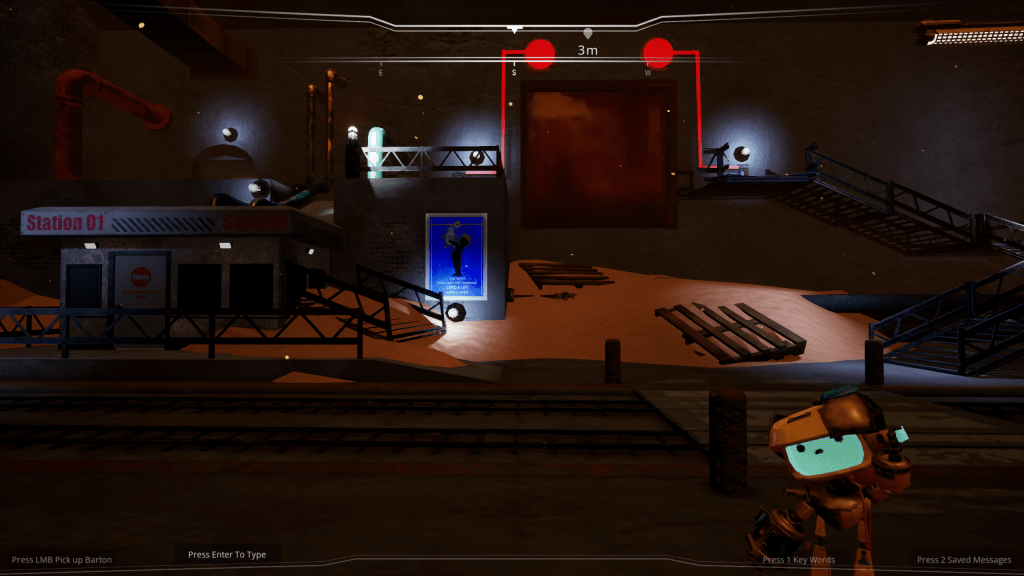
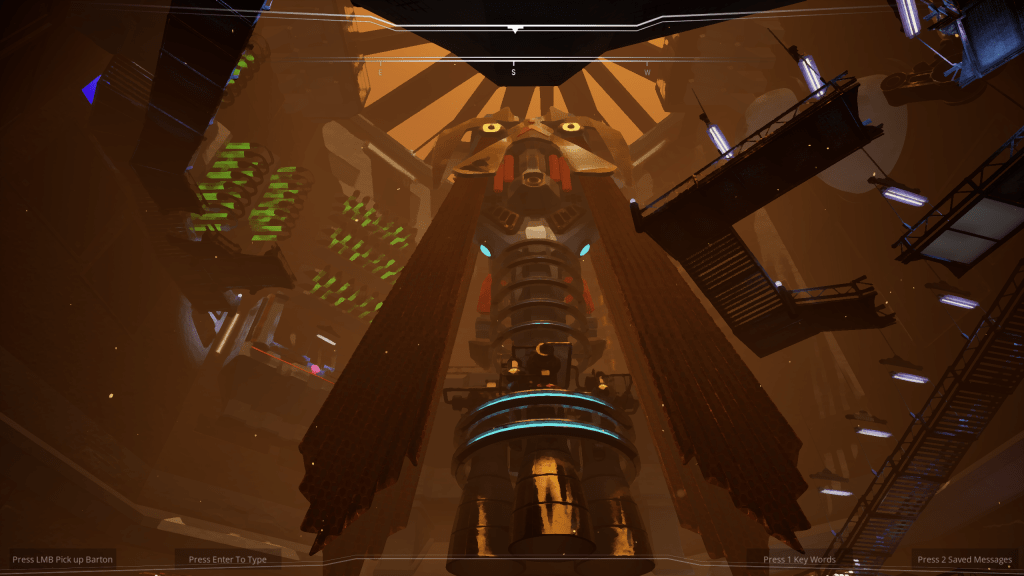

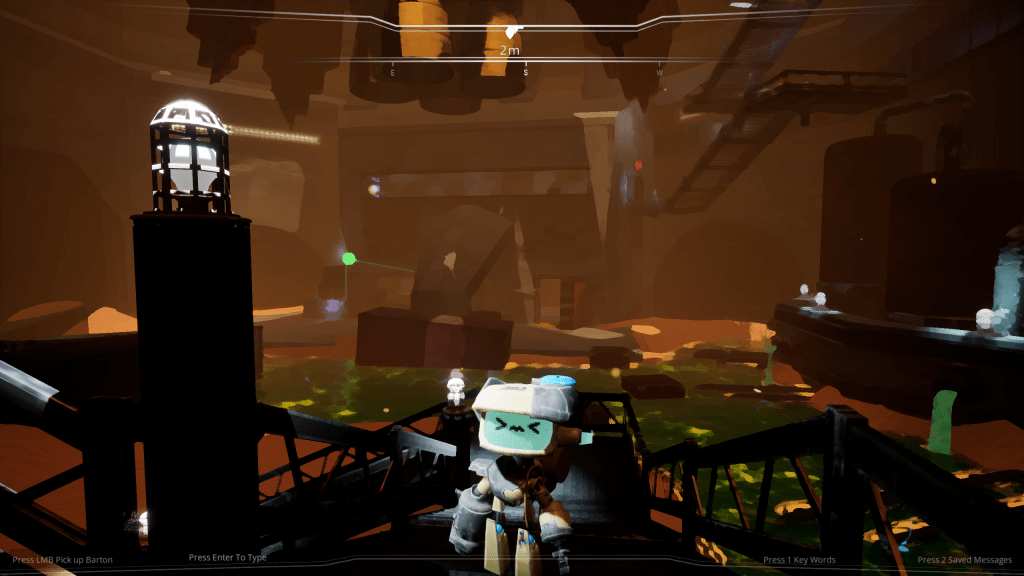
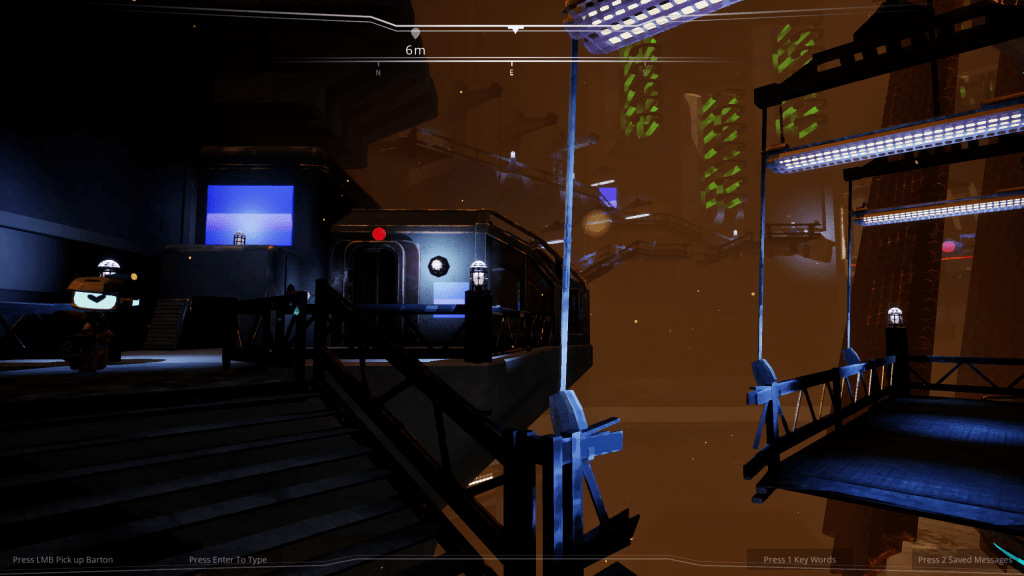
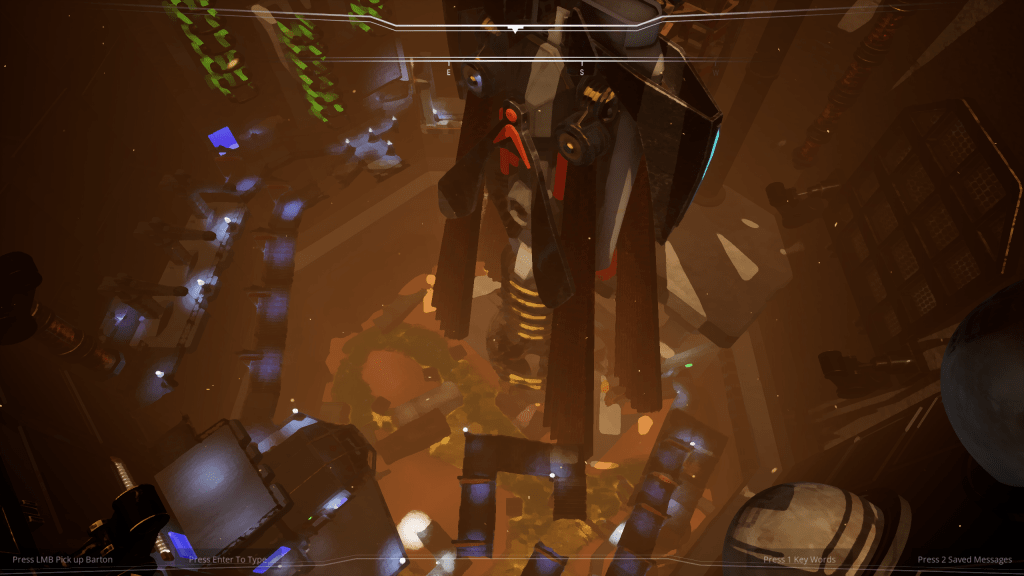

Screenshots from the final version of the environments for Barton.
 Carter Hoke